
AthleticsIntegrityUnit
Athletics Integrity Unit works for clean sport around the world. For three years I was AIU’s only designer: from annual reports and event branding to social media for an organization active in 135 countries.
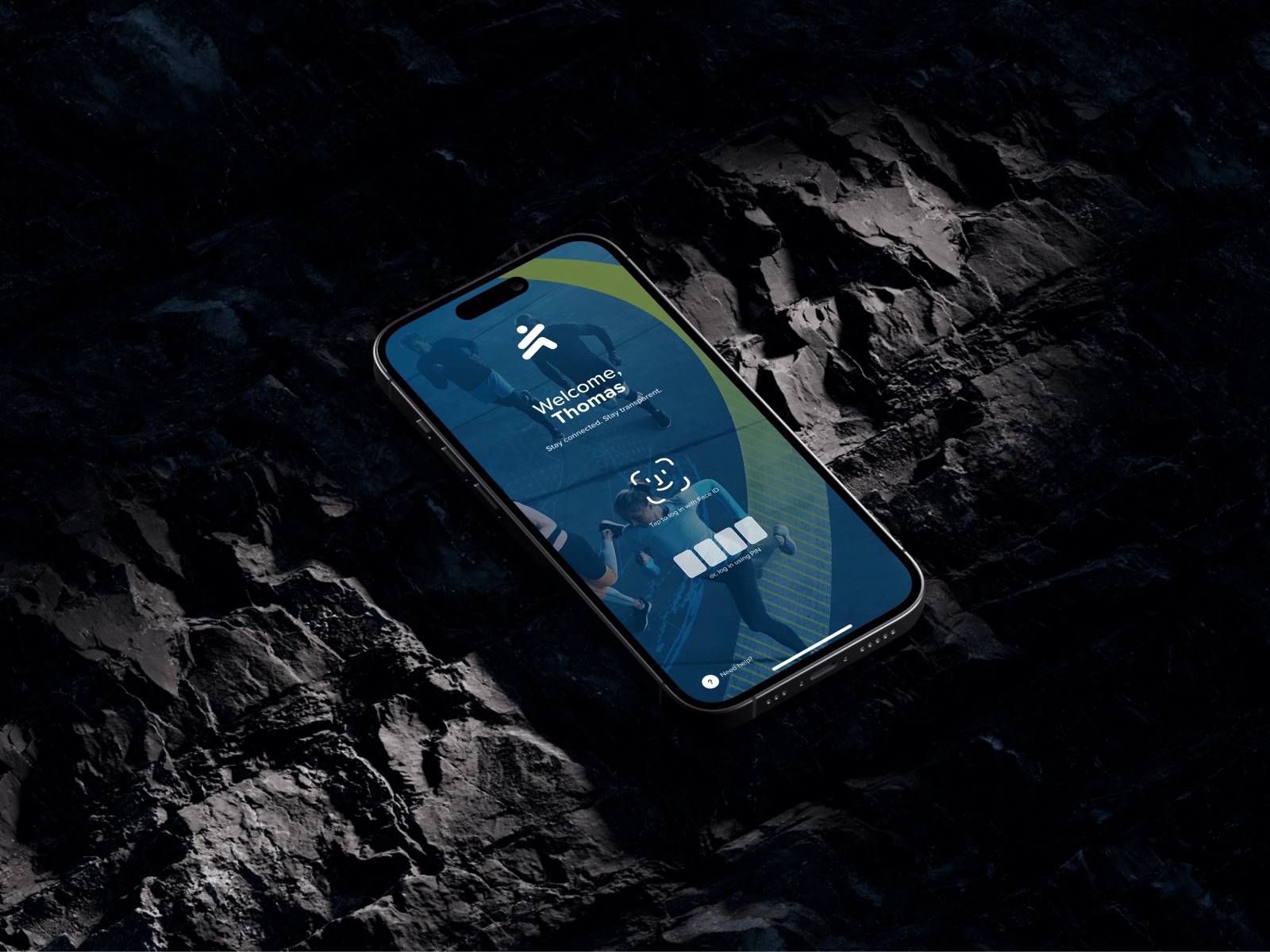
Context and challenge
AIU communicates about doping, and on that subject credibility is everything. The audience ranges from skeptical media to athletes scrolling Instagram.
When I joined, the channels were run by the education team with no visual system: event photos, partners’ graphics reposted in someone else’s branding, no consistent typography or grid. Everything worked, but it had no voice of its own. The organization had to look like what it is: a serious, independent institution, without losing the energy of sport.
My role
I was the only designer on this client. AIU preferred to plan projects around my availability rather than work with rotating designers. For three years I set the visual direction, proposed new formats, kept everything they publish consistent, and worked directly with the client, developing ideas together in online meetings.
I designed everything myself: every chart, every layout and every post in this case study came from my hands.
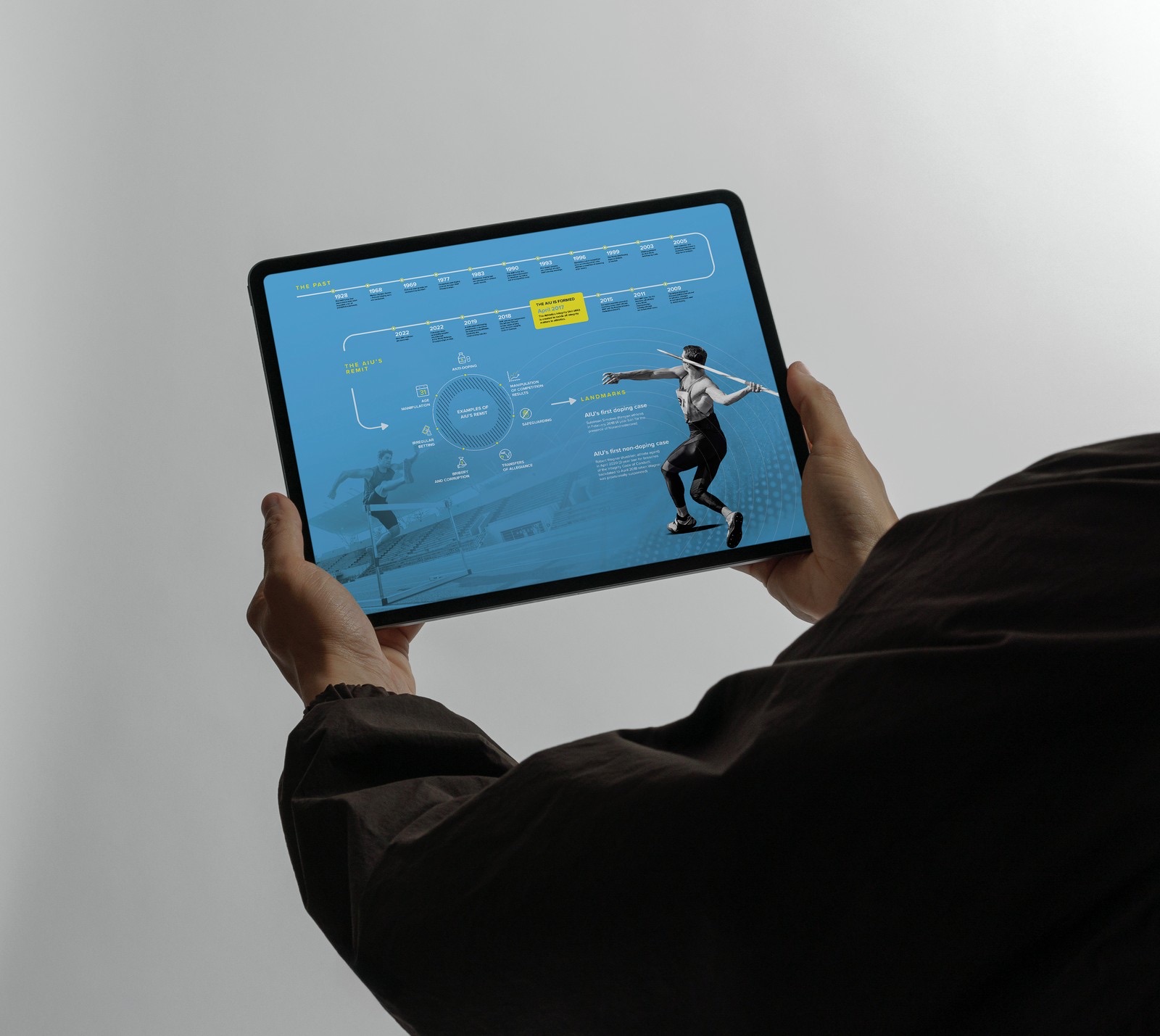
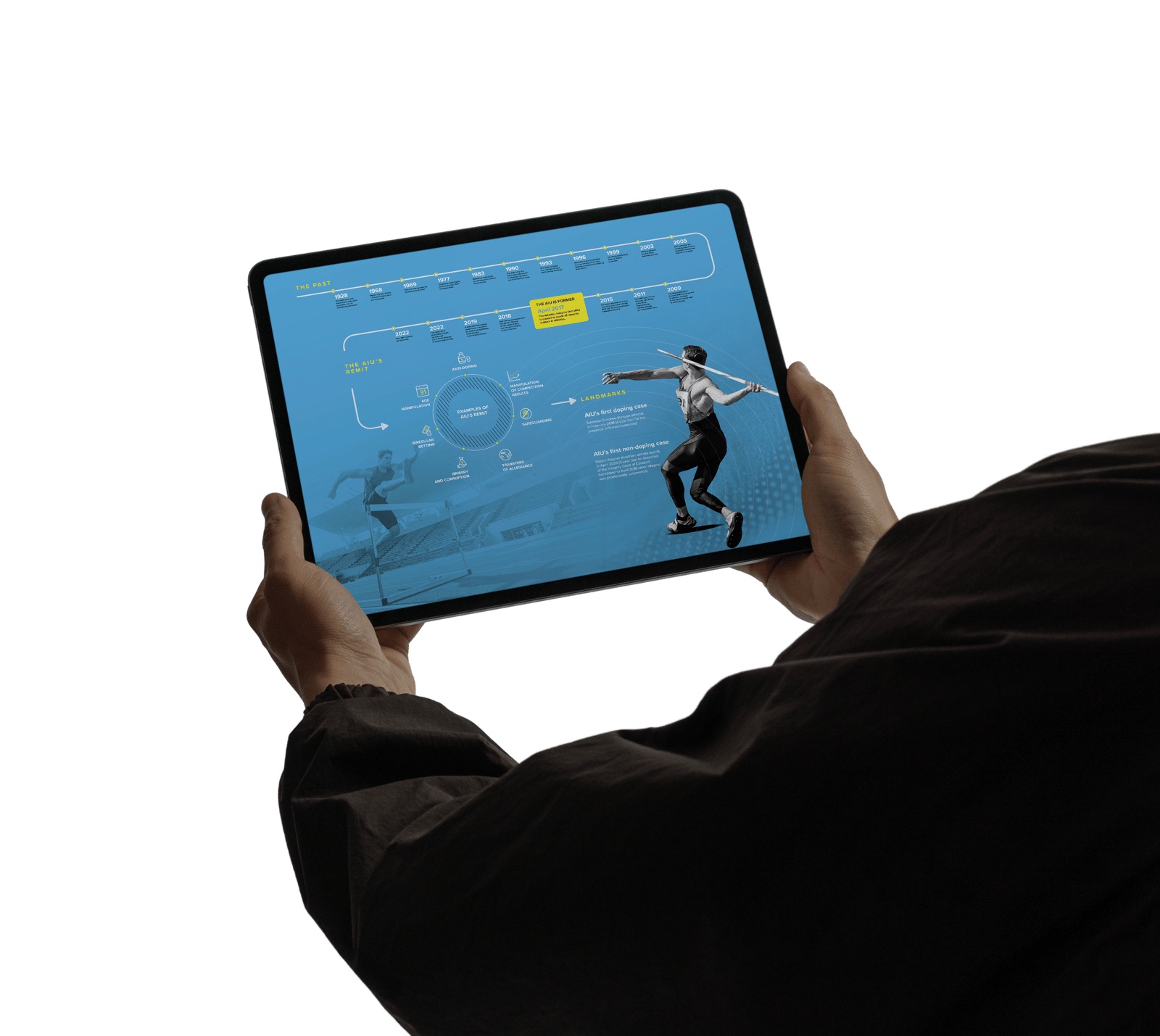
How the system came to be
The key design decisions.
Decision 01An infographic system, not one-off charts
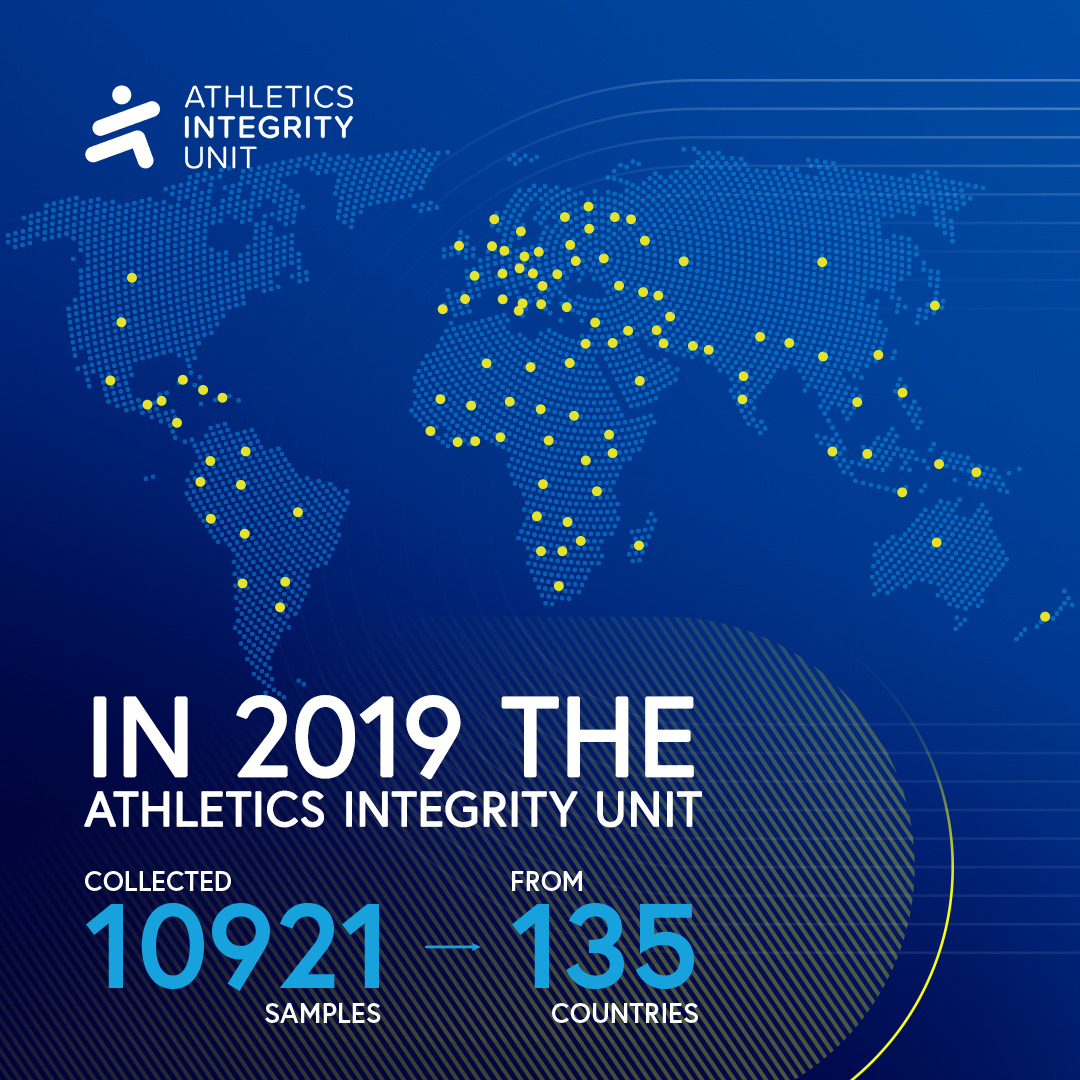
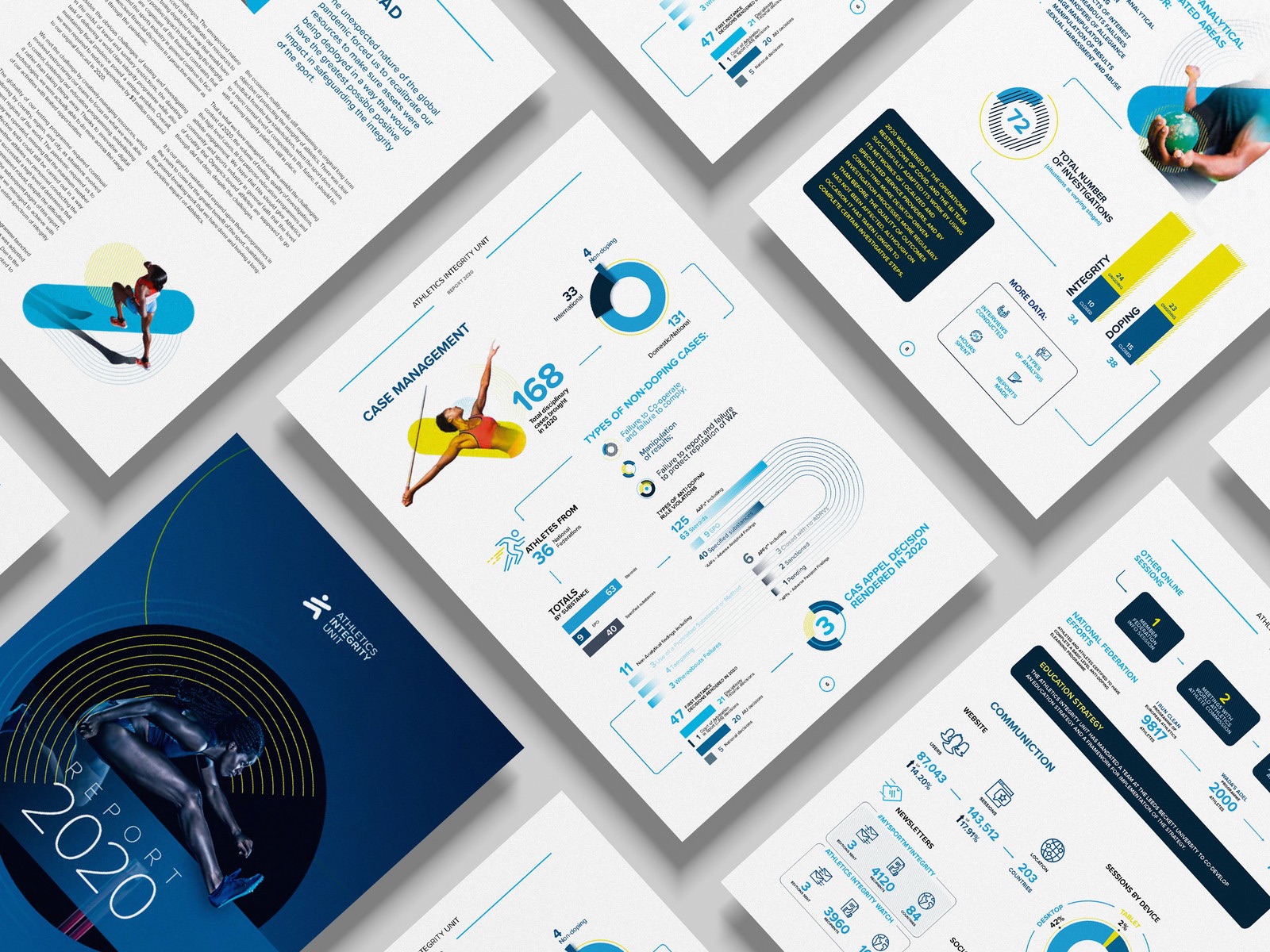
In the annual reports I built a repeatable visual language for data on testing, geography and case statistics: a modular grid for data spreads, a way of setting numbers that keeps large values legible in both the report and social media, a custom icon set for sample types and sanctions, and rules for how charts behave whether a dataset has three values or thirty. Dense integrity figures became something the media can quote and athletes can actually read.
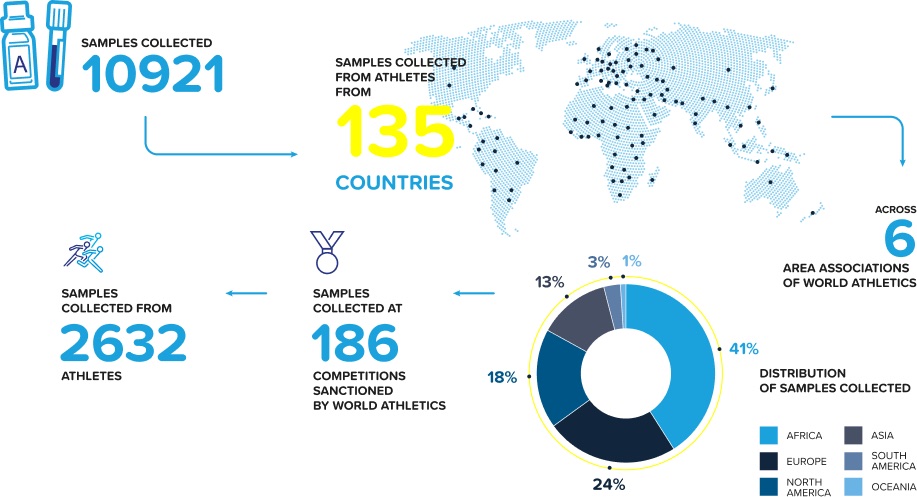
Decision 02One language, two registers
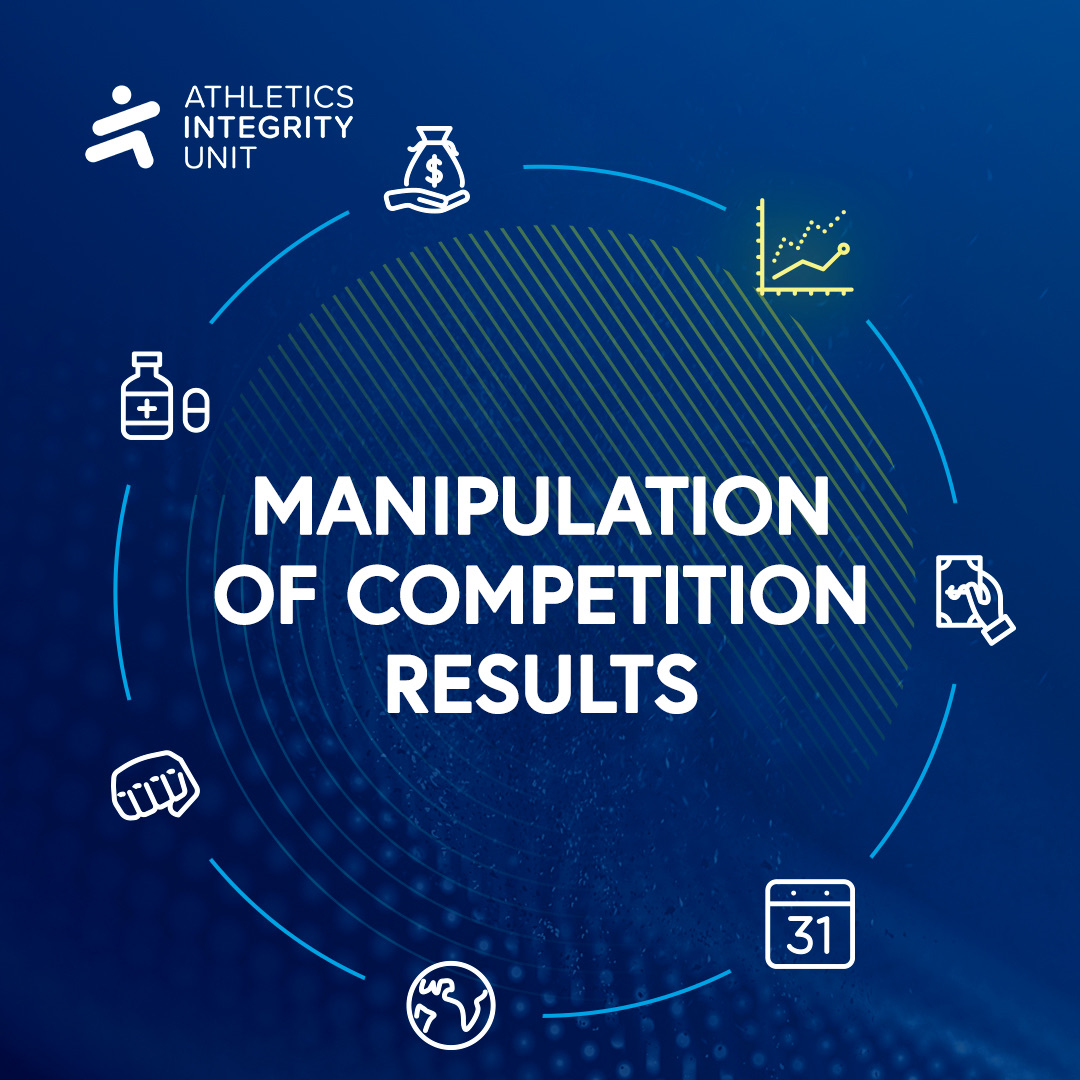
The same foundations (grid, type scale, colour logic, photo treatment) carry both the institutional annual report and an Instagram post about an athlete’s whereabouts deadlines.
I drew both ends of that scale myself, which is exactly why the system stayed honest: I wrote nothing into the rules that I hadn’t first done under deadline pressure.
Thanks to this, AIU stayed consistent whether it was addressing federations or young athletes, and monthly social media production became efficient, because every post started from a system, not from zero.

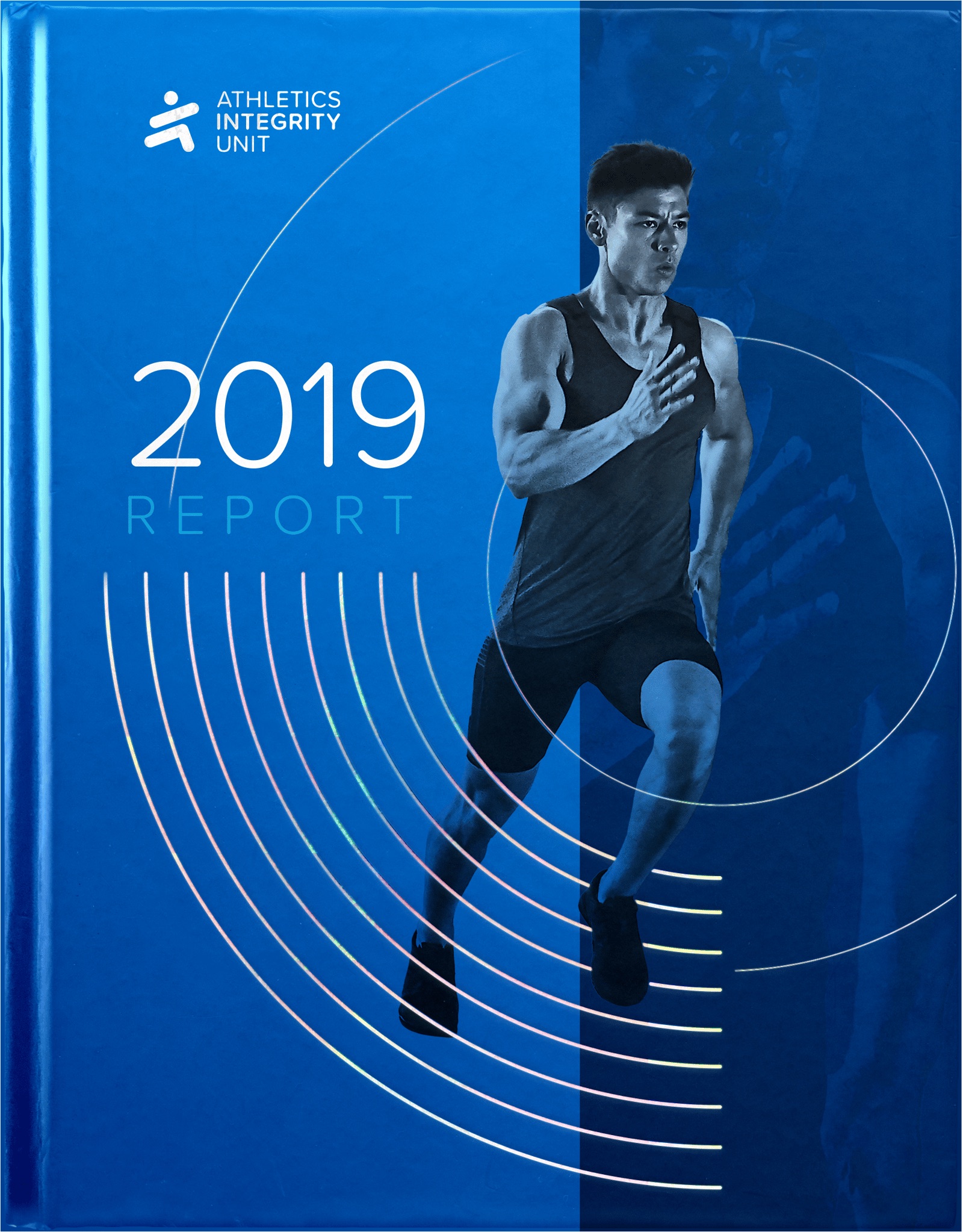
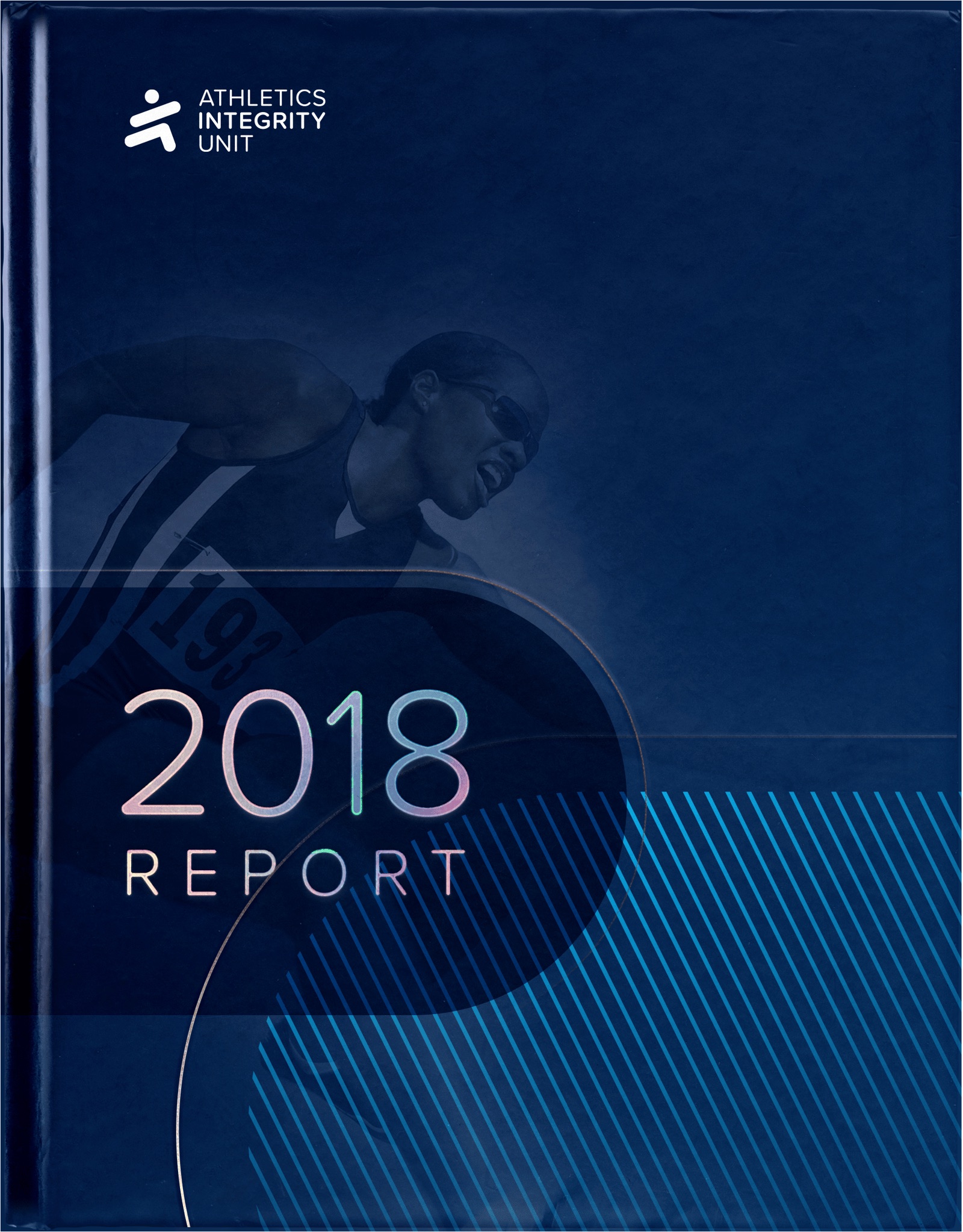
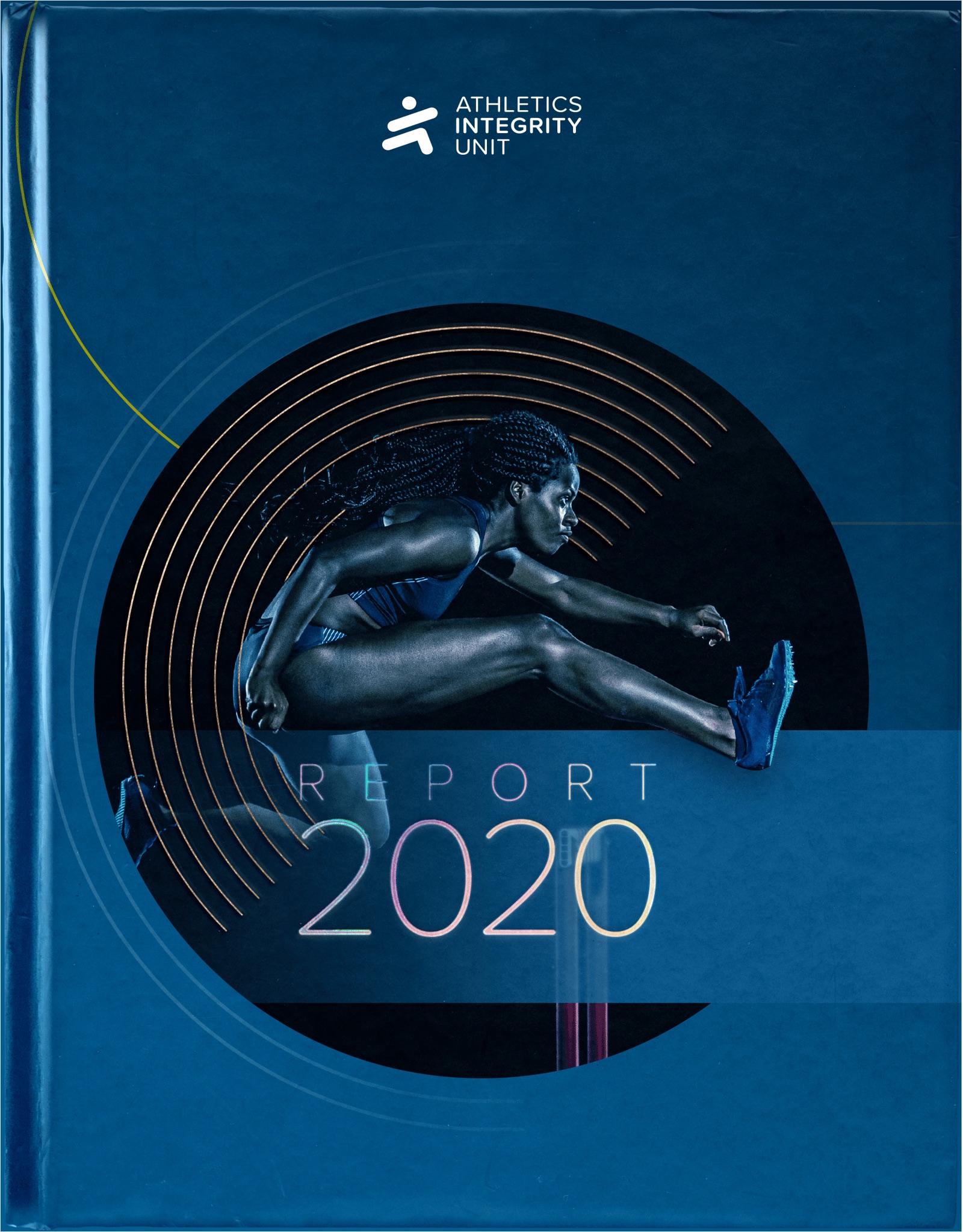
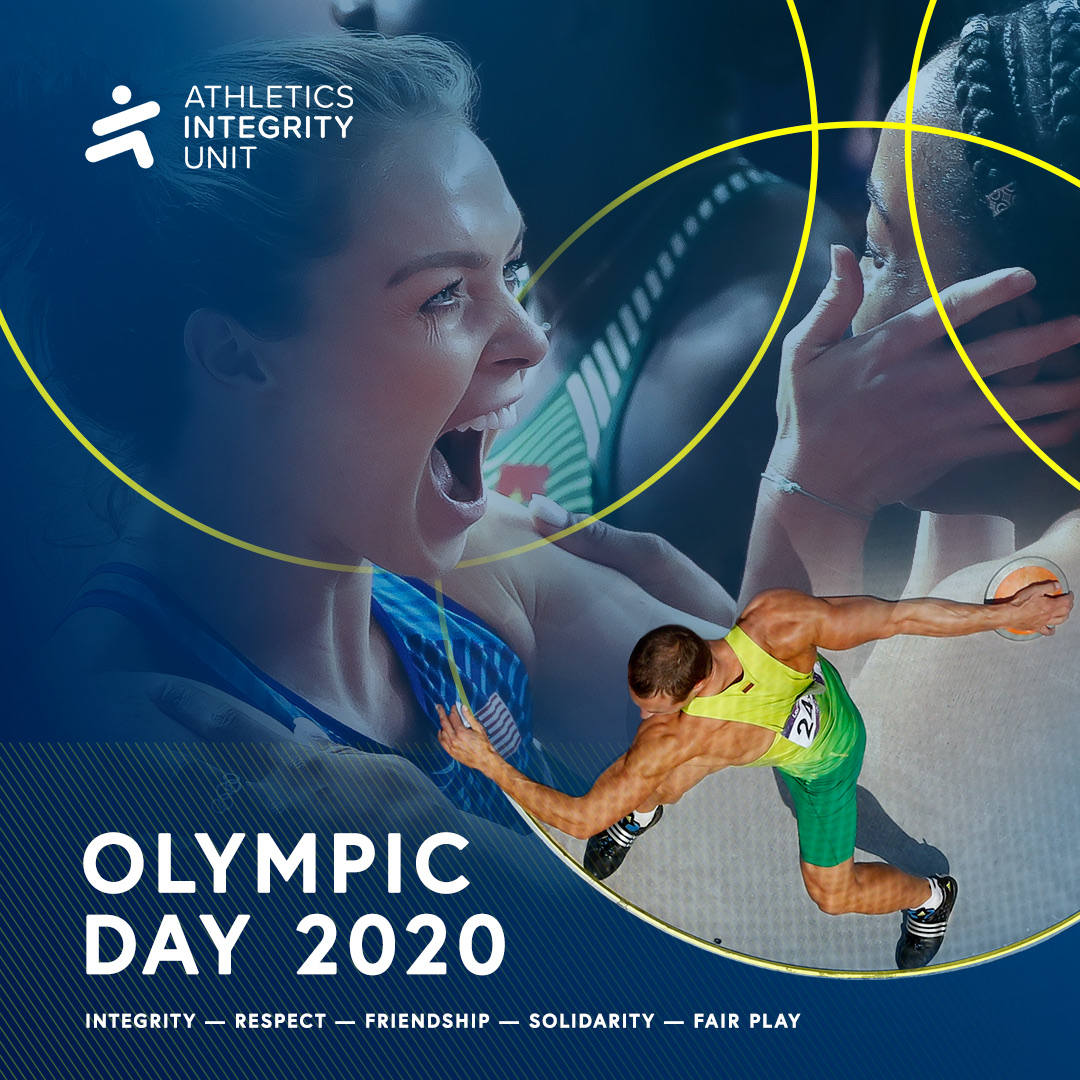
Complex data and global campaigns in one coherent brand story.
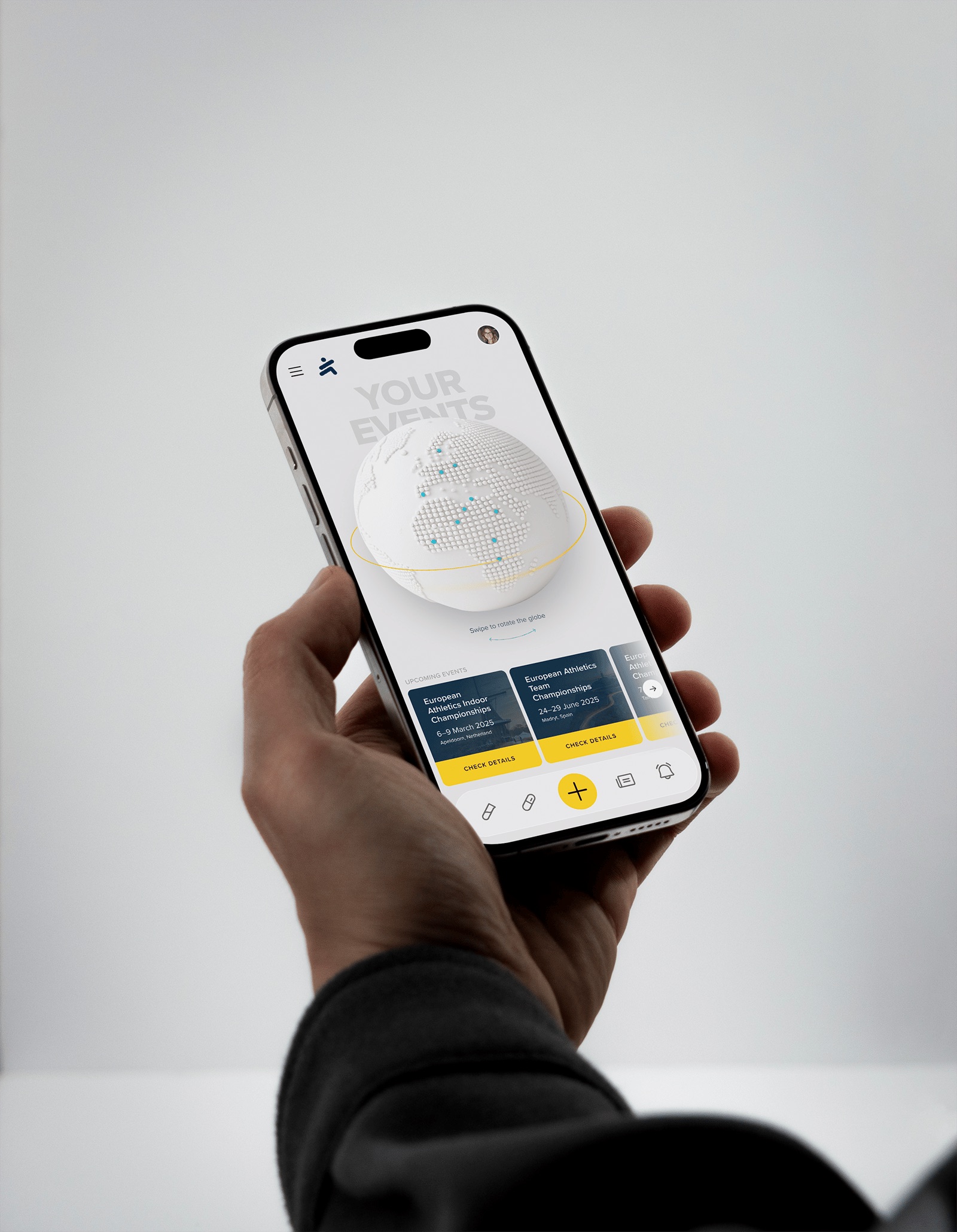
From Instagram posts to international reports: every element was part of one visual system.
The system in action
From reports to global campaigns.


Result
Recurring social media content every month, presentations and full event branding (roll-ups, backdrops, print), all recognizably in one voice. Direction and execution came from the same hands. The infographic system outlived my departure and was continued in later reports.
The recommendation I value most is one nobody wrote down: AIU preferred to wait for my availability rather than bring anyone else into the project.
Working on communication about integrity in sport taught me that credibility is a design material, built chart by chart, report by report.